Gamification in Private Tutoring: How to Motivate Students with Games
Published on October 6, 2026 · Clases Personalizadas Editorial
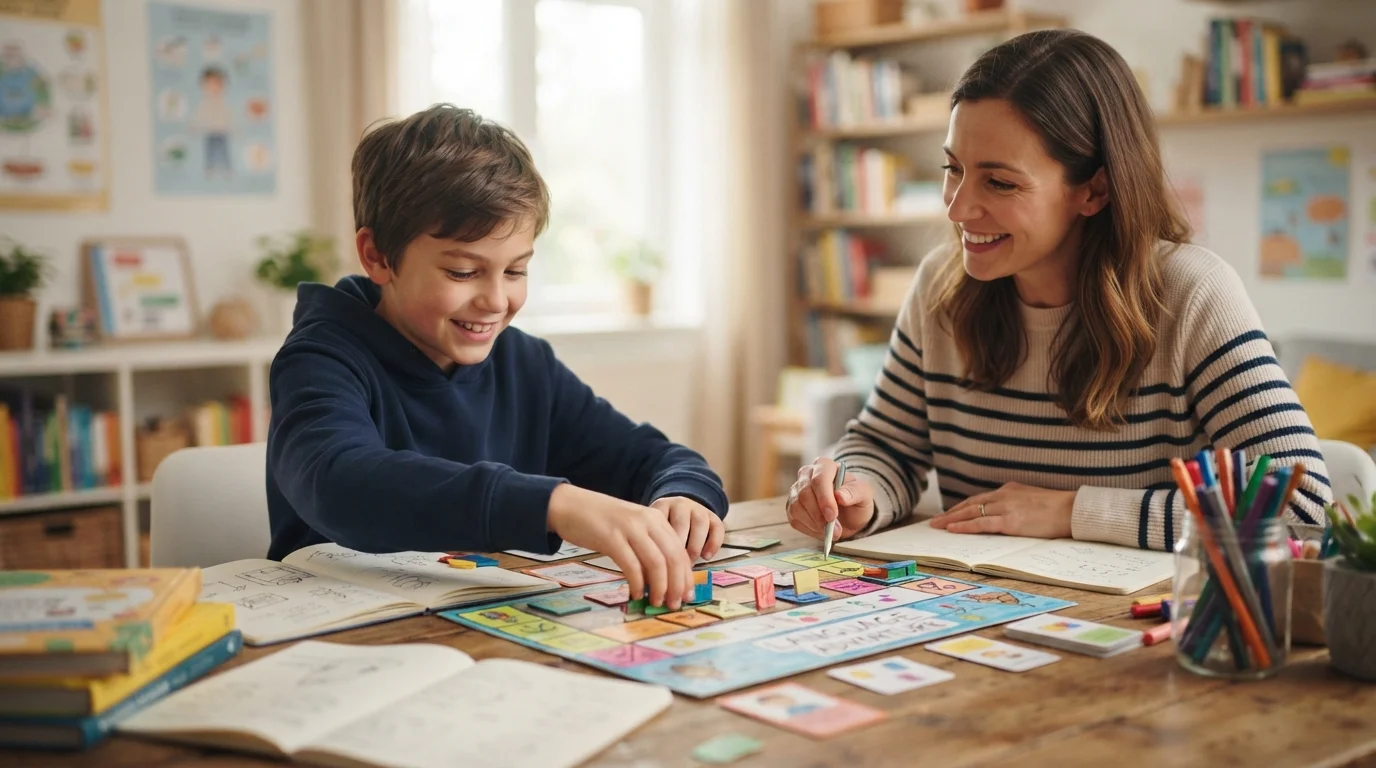
Gamification in private tutoring turns an ordinary lesson into something the student wants to repeat: short challenges, visible progress and instant feedback. It is not about stuffing the session with prizes, but about using game mechanics so attention lasts the whole lesson.
What gamification in private tutoring is (and is not)
Gamifying means bringing game elements into learning: points, challenges, levels, badges, a narrative and instant feedback. Content still leads; the game is the wrapper that hooks the student and makes them want to move forward.
It helps to keep three ideas apart, because they get mixed up all the time. Gamification uses game mechanics over your real content. Game-based learning uses a complete game as a classroom activity. Serious games are video games built specifically to teach. In private tutoring the first option tends to work best: light mechanics layered on the subject you are already teaching.
Why it works especially well one-to-one
In a one-to-one lesson there is no audience. The student is not competing against other learners: they are competing against last week's own score. That lowers social pressure and turns the challenge into motivation instead of fear of looking bad in front of a class.
Mistakes also stop being embarrassing when they are part of a game. You can fail, see the result instantly and try again without drama. Teaching with immediate feedback is learning with immediate feedback.
And it targets the number one reason students quit: not seeing progress, getting bored and leaving. Visible progress, with levels, streaks and goals met, is what makes them come back for the next lesson. Fewer dropouts also mean steadier income for the tutor.
The motivation pillars you cannot skip
The psychology of motivation points to two engines. Extrinsic motivation (prizes, points, avoiding punishment) starts fast but fades. Intrinsic motivation, wanting to learn because the subject interests you, is what keeps a student going for months. Your game system has to feed the second one, not just the first.
Self-determination theory boils it down to three needs: autonomy (being able to choose), competence (feeling capable) and relatedness (connecting with the person teaching). Good game design touches all three.
Daniel Pink's RAMP model points the same way: relatedness, autonomy, mastery and purpose. Practical rule: if your dynamic takes away the student's sense of choice or of moving towards something meaningful, it only entertains; it does not teach.
Simple mechanics you can start with today (no apps needed)
You do not need software or a complex system. Four pieces are enough to build your first one: points or XP for work done and for errors fixed, streaks for consecutive practice days, badges for mastering a topic and levels for completed blocks.
Here is an example for a 60-minute lesson. The first 10 minutes are review with a streak of three chained questions; every correct answer earns XP and every corrected mistake earns XP too, because the point is to reward reviewing, not only getting things right. Then come 30 minutes of new content with one short timed challenge. You close with 10 minutes of free practice and 10 more where the student picks the badge they want to chase next week.
Another resource that works very well is the "boss battle". Before an exam, turn revision into a mission with a timer, several levels and a symbolic reward at the end. Revision stops being a punishment and becomes the moment the student looks forward to.
Adapting it by age and subject
With children, narrative, characters, colour and concrete rewards work well in short sessions: play is their natural vehicle for learning, but never lose sight of the lesson objective.
With teenagers, raise the level: challenges, leagues against themselves, humour and some choice. Anything that sounds childish pushes them away instantly. With adults, clear goals, tracking and mastery achievements work best; there is no need to dress the lesson up as a kids' game.
By subject the examples are simple. Languages: role-play, vocabulary streaks and conversation levels. Maths: timed challenges, contest-style problems and badges per exercise type. Music: weekly practice goals and combos for consecutive study days.
Free digital tools for your online classes
Kahoot, Quizizz, Blooket, Wordwall and Gimkit have free tiers that are enough to get started. In one-to-one lessons you use them with turns, in individual mode or by sharing your screen, depending on how you prefer to run the session.
The key is to remember that the tool is not the method. First define the learning objective, then pick the mechanic and only at the end the app. Two or three tools used well beat ten used badly.
If you teach online, test it before the session. One minute of a frozen screen kills all the magic of the game and the student loses the thread.
Mistakes that ruin gamification
The first is rewarding absolutely everything. When learning becomes a transaction (I do this and you give me points), genuine interest fades: this is the overjustification effect described by research on rewards. Rewards are the starter, not the engine.
The second is using mechanics that do not assess real learning. The student has fun but does not progress. Every dynamic must make clear what is being practised and how you will know it was learned.
The third is treating teenagers and adults like children, or turning every lesson into a show and losing the content. And the fourth, very common: copying the same system for every student without checking whether it works for that particular learner.
Conclusion: design your first gamified lesson
A simple plan: pick one concrete objective, define one simple mechanic, try it for a week and measure how much attention time you gain. Adjust and repeat. Do not build a complex system on day one.
And be honest: gamification does not fix badly prepared content or guarantee students. It multiplies what already works; if your lesson is not clear, the game only disguises it.
If you want students to put these techniques into practice with, publish your free listing on clasespersonalizadas.com with your subjects, levels and availability. Your first gamified lesson may be the one that keeps a student for the whole year.